
Quick Summary
Quick Summary
- On 9 November 2026 a Fair Work Commission Expert Panel varied the Road Transport Contractual Chain Order – Fuel Cost Recovery – 2026 (decision [2026] FWCFB 294).
- From 23 November 2026, primary and secondary parties in covered chains must adjust or set rates to recover increased fuel costs against a 6 March 2026 baseline.
- Rate adjustments must occur at least once every calendar month — a one-off review will not comply.
- Primary parties that are not small business employers must also take reasonable steps to ensure secondary parties adjust their rates monthly.
- Obligations cease only if the average national terminal gate diesel price stays below $2 a litre for 4 consecutive weeks, or the order is revoked or varied.
Fuel cost recovery obligations under the road transport contractual chain order restart on 23 November 2026. On 9 November 2026, a Fair Work Commission Expert Panel varied the Road Transport Contractual Chain Order – Fuel Cost Recovery – 2026 in decision [2026] FWCFB 294. If your business sits anywhere in an Australian road freight chain — as the business at the top, a broker, a prime contractor or a subcontractor — you must adjust or set the rates you pay so they recover the increased cost of fuel measured against 6 March 2026, and review those rates at least once every calendar month.
What Is the Road Transport Contractual Chain Order?
The Road Transport Contractual Chain Order – Fuel Cost Recovery – 2026 is a binding order made by the Fair Work Commission under powers in the Fair Work Act 2009 covering the road transport industry. The Expert Panel made the order in April 2026 after a joint application by the Transport Workers’ Union and the Australian Road Transport Industrial Organisation (major case MS2026/1); it took effect on 21 April 2026. We explained the fuel cost recovery order changes when the variation proposal was announced in October.
A contractual chain is a series of contracts under which work in the road transport industry gets performed. The business at the top of the chain that engages others to move freight is the primary party. Every business it engages, and every business those businesses engage further down — brokers, prime contractors, fleet operators and owner drivers — are secondary parties. The order exists so rising diesel costs are not simply parked on the smallest party at the bottom of the chain. Cash in transit work is not covered.
What Changed in the FWC’s November 2026 Variations
On 9 November 2026 the Expert Panel handed down its decision varying the order ([2026] FWCFB 294), together with a determination listing all changes and a consolidated order. The practical effect for employers:
- Obligations restart on 23 November 2026. Primary and secondary parties must adjust or set the rates they pay so those rates recover the increased cost of fuel compared with 6 March 2026.
- Adjustments must happen at least once each calendar month. A one-off review will not satisfy the order.
- Bigger parties carry a downstream duty. Primary parties that are not small business employers must take reasonable steps to ensure secondary parties adjust their rates each calendar month.
- A fuel levy or surcharge is now an option. In certain circumstances, the adjustment can be made by an agreed fuel levy or surcharge.
The variation is not an award pay rise. If your drivers or contractors are covered by a modern award, your modern awards compliance duties continue unchanged.
📅 Deadline: 23 November 2026
Fuel cost recovery rate adjustment obligations restart on 23 November 2026. Every covered party in a road transport contractual chain must be ready to adjust or set rates from that date, and to review them at least once each calendar month.
Key Takeaways
Key Takeaways for Employers
- ✓Map your contractual chains now and confirm whether you are a primary or secondary party in each.
- ✓Build a monthly rate-review routine before 23 November 2026 — monthly cadence is now mandatory.
- ✓An agreed, documented fuel levy or surcharge can satisfy the adjustment in certain circumstances.
- ✓Small business primary parties (fewer than 15 employees) do not carry the downstream monitoring duty — larger parties do.
- ✓Keep records of every adjustment, including the fuel price data behind it.
Fair Work Centre
Need help with modern awards compliance?
Our employment lawyers advise employers only — no call centres, no generalists. Get straight answers from people who know the Fair Work Act inside out.
Free Templates
Get free employment agreement templates — Basic, Full-Time, Part-Time & Casual.
Fuel Cost Recovery Adjustments: Obligations From 23 November 2026
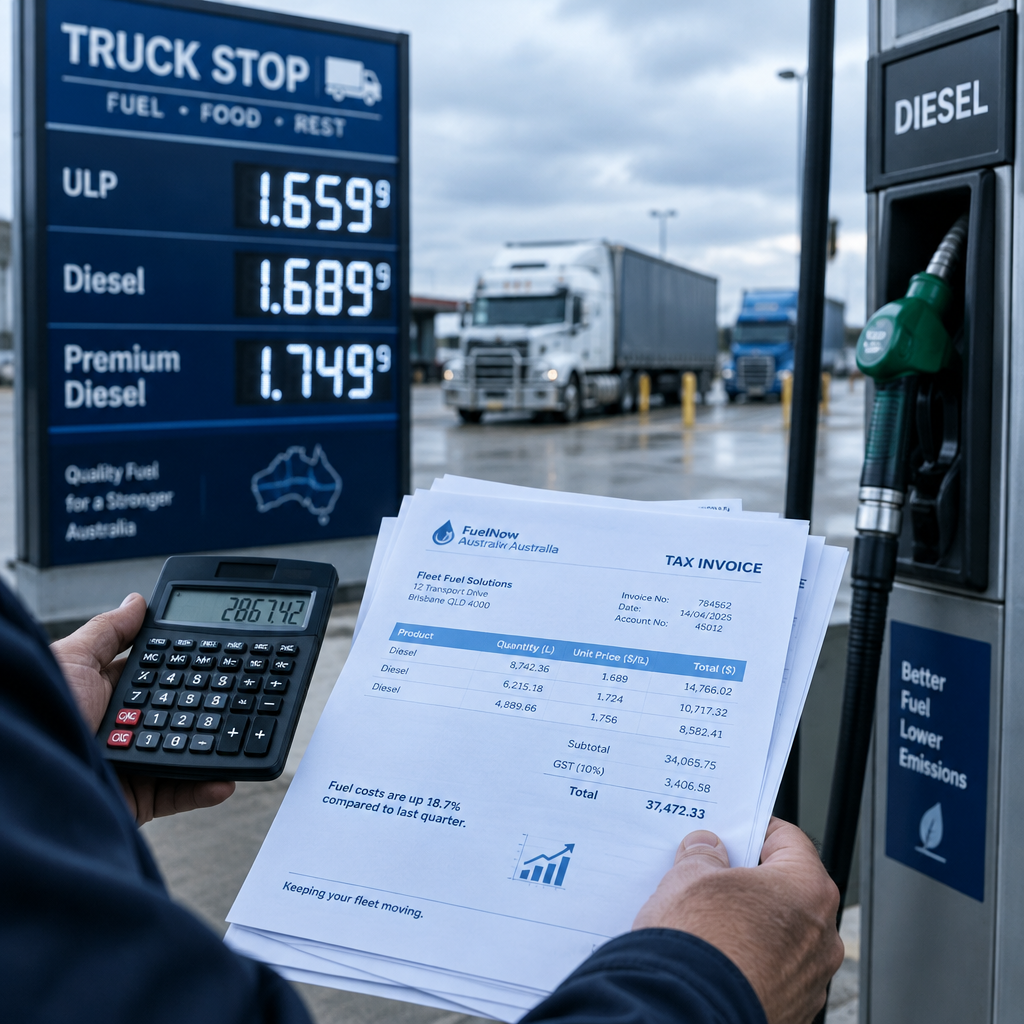
From 23 November 2026, every covered party must be able to show that the rates it pays recover the increased cost of fuel against the 6 March 2026 baseline. For primary parties, that means reviewing the contract rates you pay to carriers and updating them where fuel costs have risen. For secondary parties, it means the same review each step further down the chain. What counts as reasonable steps depends on your position in the chain, but in practice: update rates in writing, check that invoices reflect the adjusted rate, and evidence the fuel data you relied on.
If you operate in the freight or logistics sector, our employment law for transport and logistics guide covers the wider compliance picture.
Can You Use a Fuel Levy or Surcharge Under the Road Transport Contractual Chain Order?
Sometimes, yes. The varied order allows the rate adjustment to be made by an agreed fuel levy or surcharge in certain circumstances, rather than by rewriting the underlying rate. Fuel levies are common in Australian transport contracts, usually a percentage of the base rate tied to a diesel price index. Under the order, the levy must be genuinely agreed with the other party, documented in the contract, and set at a level that actually recovers the increased fuel cost against the 6 March 2026 baseline. A levy that does not move with diesel prices, or an undocumented surcharge, will not comply.
When the Fuel Cost Recovery Obligations End
The obligations cease if the average national terminal gate price for diesel falls below $2 a litre for 4 consecutive weeks, or if the Fair Work Commission revokes or varies the order. Until one of those trigger points is reached, the monthly adjustment duty continues. The order sits on top of — not instead of — your existing obligations under the National Employment Standards, applicable awards and your employment contracts.
Employer Checklist Before 23 November 2026
- Map your chains. Identify every contract under which road transport work is performed for your business, and confirm whether you are a primary or secondary party.
- Check your size. Work out whether you are a small business employer (fewer than 15 employees) — it determines whether you carry the downstream monitoring duty.
- Build a monthly routine. Put a calendar-month fuel review into your rate-setting process, with a documented owner and sign-off.
- Choose your method. Decide between direct rate adjustments and an agreed fuel levy or surcharge, and document the agreement in writing.
- Keep records. Retain the fuel price data, calculations and updated rates for every adjustment — contemporaneous records are your defence if a regulator asks.
If you engage carriers or drivers without watertight contracts, start there: our free employment documents and templates give you a base to work from, and a written engagement contract is the cheapest compliance tool you will ever buy.
Frequently Asked Questions
The Road Transport Contractual Chain Order – Fuel Cost Recovery – 2026 is a binding order made by the Fair Work Commission under the Fair Work Act 2009. It covers parties in a contractual chain for work in the road transport industry — head-of-chain businesses, brokers, prime contractors and subcontractors — and requires rates paid along the chain to recover increased fuel costs. Cash in transit work is not covered.
On 9 November 2026 the Expert Panel handed down decision [2026] FWCFB 294 and varied the order. The key changes: obligations restart from 23 November 2026 against a 6 March 2026 fuel cost baseline; adjustments must happen at least once each calendar month; primary parties that are not small business employers must ensure secondary parties adjust rates too; and adjustments can be made by an agreed fuel levy or surcharge.
23 November 2026. From that date, primary and secondary parties in covered chains must adjust or set the rates they pay so those rates recover the increased cost of fuel compared with 6 March 2026. Because reviews must occur at least monthly, businesses should have their first adjustment process ready before the date arrives — not after.
Both. A primary party is the business at the top of the chain that engages others to perform road transport work. Secondary parties are the businesses further down the chain — prime contractors, fleet operators and subcontractors who engage the next party. Every covered party must adjust or set its own rates monthly to recover increased fuel costs.
No. Primary parties that are not small business employers — generally those with 15 or more employees — must take reasonable steps to ensure secondary parties in the same chain adjust or set their rates each calendar month. Small business primary parties are exempt from that downstream monitoring duty, but must still adjust their own rates.
In certain circumstances, yes. The varied order allows the required rate adjustment to be made by an agreed fuel levy or surcharge rather than rewriting the underlying rate. The levy must be genuinely agreed with the other party, documented, and set at a level that actually recovers the increased cost of fuel against the 6 March 2026 baseline. An undocumented surcharge will not satisfy the order.
At least once every calendar month. Each month, covered parties must check fuel costs against the 6 March 2026 baseline, adjust or set rates so increased fuel costs are recovered, and keep records showing they did.
The obligations cease if the average national terminal gate price for diesel falls below $2 a litre for 4 consecutive weeks, or if the Fair Work Commission revokes or varies the order. Until one of those trigger points is reached, monthly adjustment obligations continue along the chain.
Join Fair Work Centre
Protect your business with the right HR support.
Join hundreds of Australian employers who rely on Fair Work Centre for employment law advice, HR documents, and Fair Work Commission representation.
Related Guides for Employers
→ Modern Awards Compliance→ Employment Law for Transport & Logistics